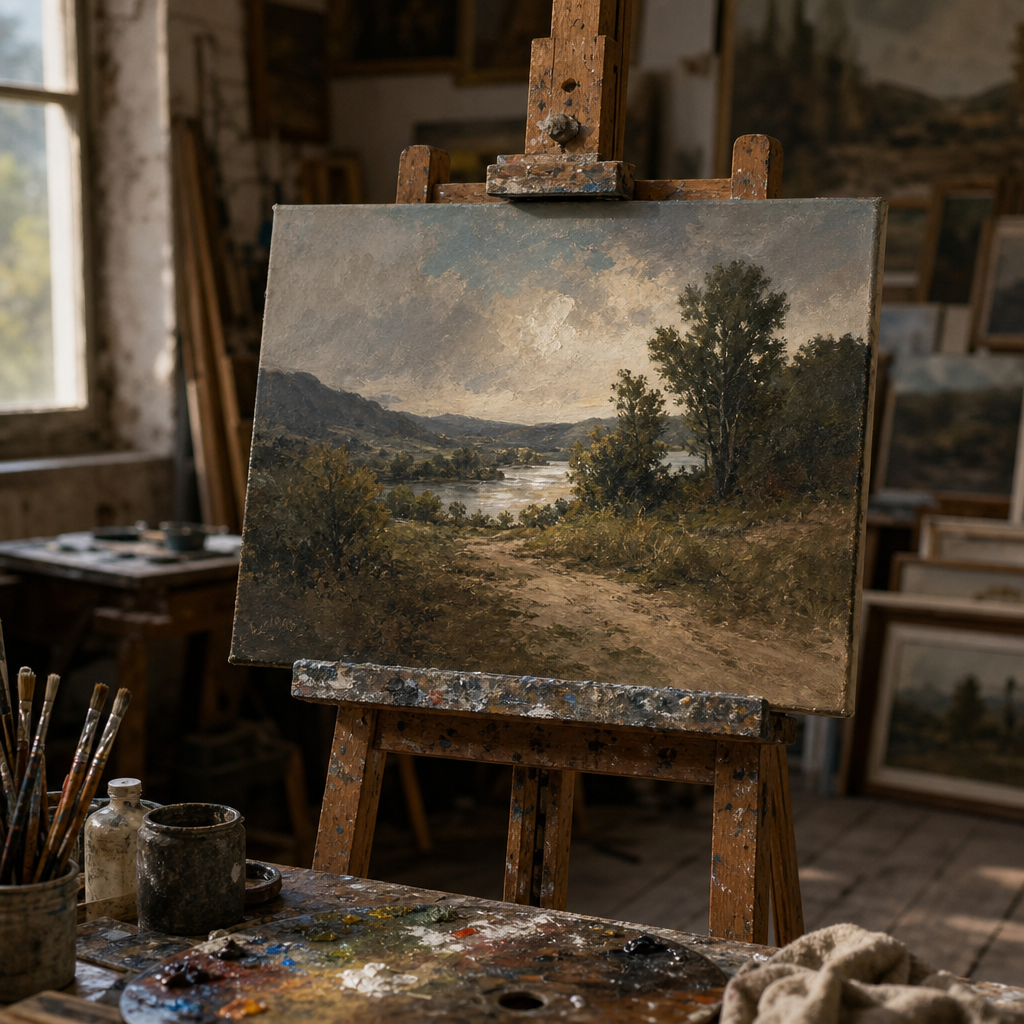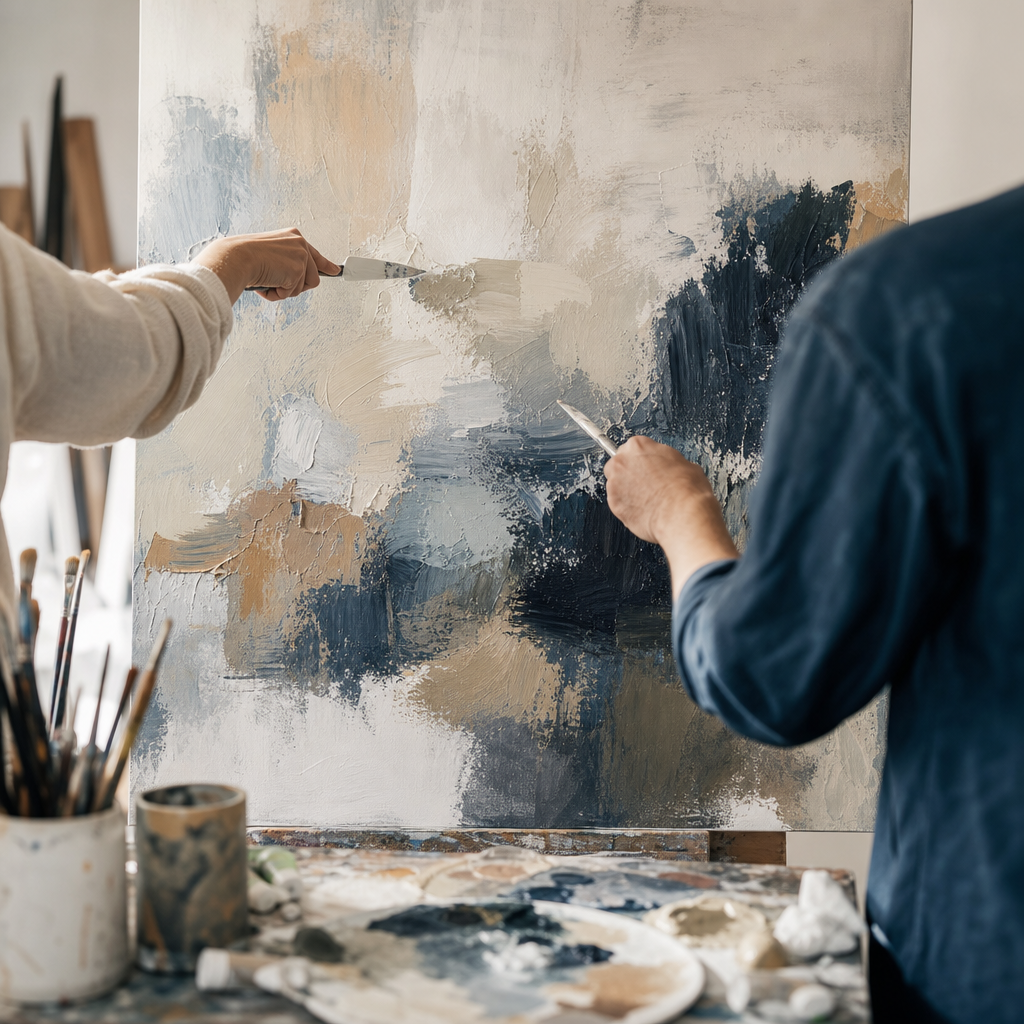
Walk into the National Gallery and pick any large Old Master off the wall – a Rubens, a Rembrandt, something densely populated with angels and velvet and someone looking anguished in the middle distance. You're almost certainly looking at several people's hands. Not collaborators in the chatty, modern sense. Something much more regimented: a workforce, ranked by law, whose job divisions left physical traces in the paint that are still there today if you know where to look.
The Guild of Saint Luke – roughly speaking, the painters' trade union of Renaissance and early modern Europe – was not messing around. Cities across the Netherlands, Italy, and beyond ran chapters of it, and membership wasn't optional. You could not legally sell paintings made outside the guild system. You could not touch certain parts of a painting unless you had earned the right to do so. The rules were about protecting livelihoods, yes, but they had an unexpected side effect: they made paint application a matter of job description.
Who Was Allowed to Touch What
At the top sat the master – the name on the door, the one whose signature, if it appeared at all, made the thing valuable. He handled the parts that mattered most: faces, hands, the fall of expensive fabric. The passages where likeness and emotion lived were his, and nobody else was going near them.
Journeymen – skilled workers who had completed their training but hadn't yet set up their own workshops – might tackle drapery, or secondary figures, or elaborate still life elements in the corners. Apprentices got the sky. Backgrounds. Flat architectural details. The bits that needed coverage more than subtlety.
This wasn't an informal arrangement, a kindly master teaching by letting the lad have a go at the clouds. It was the enforced structure of a regulated trade, and in some cities guild inspectors could visit a workshop and examine finished work for signs of rule-breaking. Letting an untrained hand near a face was not just bad practice; it was potentially an offence.
The Seams That Restorers Find
Here is where it gets quietly astonishing. These labour divisions show up in the paint itself.
When paintings from this period go in for conservation – cleaning off centuries of varnish, repairing damage, working out what's original and what's been touched up – restorers find something remarkable. The handling in different parts of the same canvas is noticeably different. The brushwork around a face has a different character from the brushwork in a landscape behind it. The pigments are laid down differently. In some cases, analysis of the paint layers shows that the background was completed and dried before the figures were added on top, which is consistent with two different hands working in sequence rather than one person moving fluidly around the composition.
It means that what we describe as an artist's "style" – the atmosphere of a Rembrandt sky, the particular quality of light in a Dutch interior – was sometimes the accumulated habit of a workshop rather than a single vision. The apprentice who did skies for a master for six years developed a way of doing skies that fed into what we now call that master's signature look. For more on the unexpected history behind how paintings were made, see The Poison That Taught Painting How to Glow.
The Lone Genius Is a Later Invention
The romantic idea of the solitary artist, suffering beautifully in a studio, making every mark themselves – that's largely an eighteenth and nineteenth century story, arriving well after the guild system had begun to loosen. Before that, a painting was much more like a piece of fine furniture or a tailored coat: something made by a team operating within a structured craft tradition, with the master's role being closer to creative director than sole author.
This doesn't make Old Masters less impressive. If anything, it makes the organisation of them impressive in a different way. To look at a Rubens and realise that the luminous face in the centre and the rapidly-handled sky at the top are different people's work, and yet the whole thing coheres completely – that takes something. Whether you call it genius or just very good management probably depends on your mood.
Next time you're in front of one of those enormous church paintings, have a look at the background. Someone learned their trade there. You're looking at their homework.