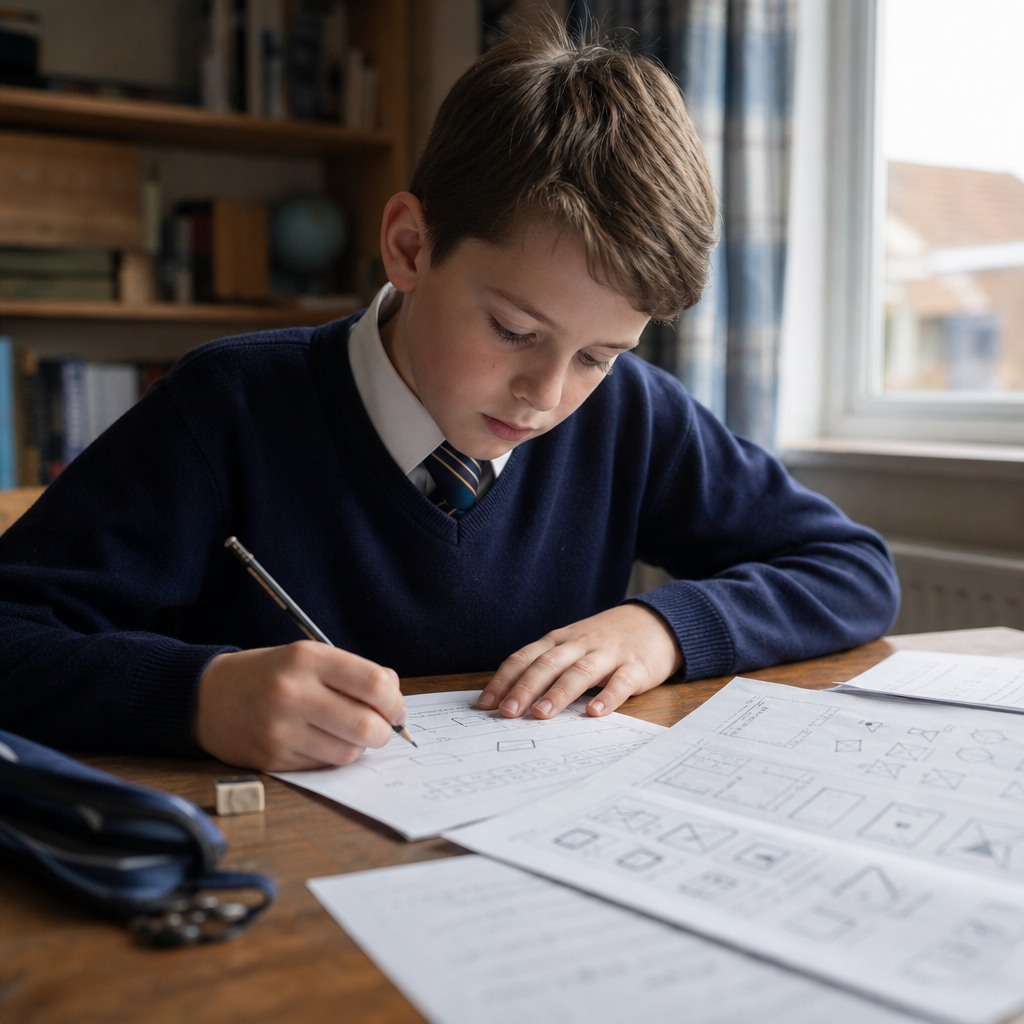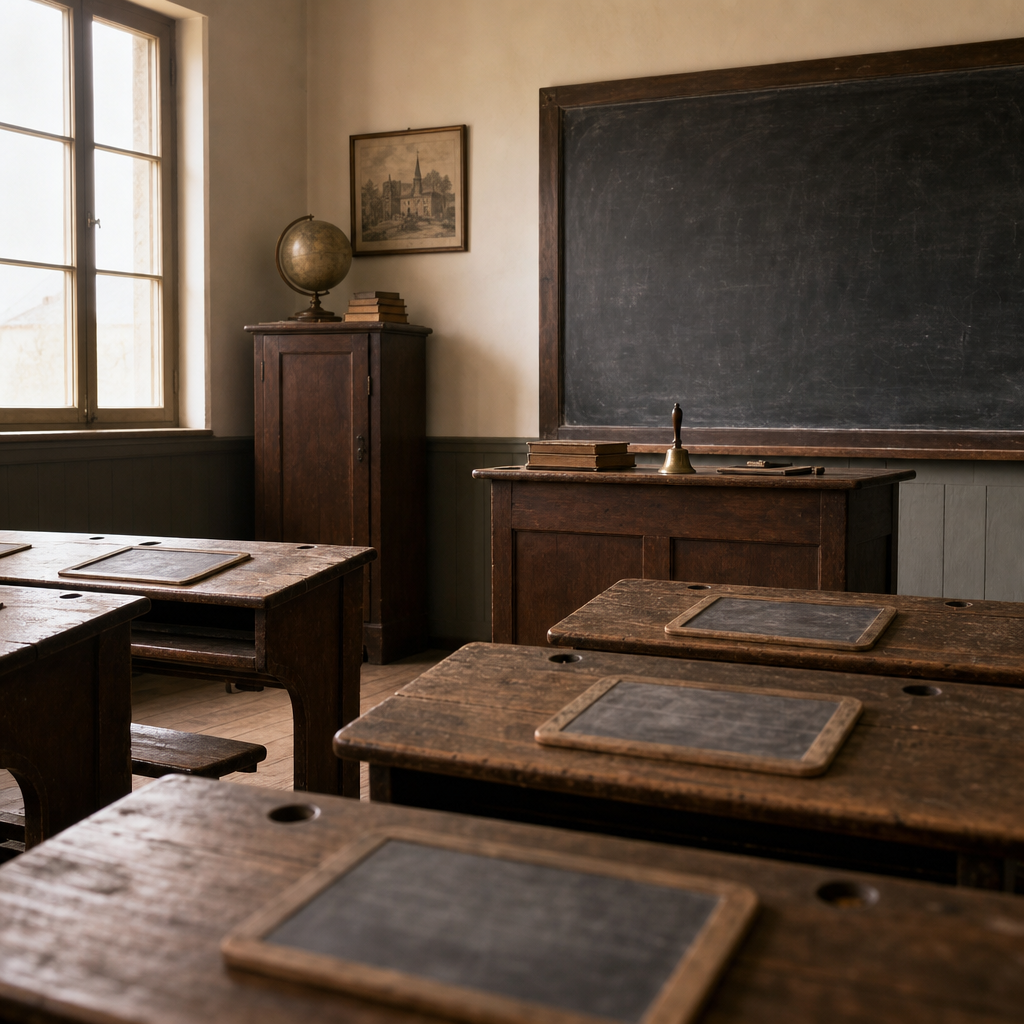
Picture a perfectly ordinary Tuesday morning in a British primary school. Twenty-eight children, all the same age, file in at the same time, open the same textbook, and move on to the next subject when a bell rings. Their teacher has a formal qualification. There's a timetable on the wall. By half past nine it all feels as natural and inevitable as gravity.
None of it is British. Barely any of it is even adapted. The whole architecture – the age-graded classes, the bell, the trained teacher, the compulsory attendance, the idea that school is simply what childhood looks like – arrived from Prussia in the nineteenth century. A small group of reformers went to look, came home completely converted, and installed the whole thing more or less as found, carrying it across the Channel without so much as a modification.
The Men Who Went to Prussia and Never Really Came Back
In the 1830s and 1840s, British education was a patchwork. Wealthy children had tutors or grammar schools. Poor children had dame schools, church schools, Sunday schools, factory schools – a tangle of provision that varied wildly depending on where you happened to be born. The state had almost no involvement, no standard curriculum, and certainly no expectation that the person standing at the front of the room had been trained for the job in any formal sense.
Prussia was different. It had introduced compulsory schooling in 1763 and by the early nineteenth century had built the whole supporting structure around it: teacher training seminaries, age-graded classrooms, a defined syllabus, government inspection. When British reformers like James Kay-Shuttleworth visited and saw it working, the reaction wasn't cautious curiosity. It was closer to a religious experience.
Kay-Shuttleworth came home and essentially set about rebuilding British education from the foundations using Prussia as the blueprint. The pupil-teacher system he introduced, where young people trained formally under qualified teachers before entering classrooms themselves, was lifted directly from what he'd seen. The Battersea Training College he founded in 1840 was consciously modelled on Prussian teacher seminaries. He wasn't borrowing ideas loosely – he was doing something closer to copying out the plans.
The Bell, the Timetable, the Grade
The Revised Code of 1862, the payment-by-results system that dominated British elementary schools for the following thirty years, is often remembered as a peculiarly British piece of bureaucratic nastiness. And it was harsh. But its underlying architecture – the idea that children should be examined year by year against defined standards, that a teacher's effectiveness could be measured, that progression through school should be systematic – came straight from the Prussian model.
Grade-years are the piece people rarely stop to think about. The idea that all seven-year-olds belong together, that education is a sequence of fixed stages you pass through in step with your birth cohort, is not an obvious way to organise learning. It's one particular answer to the question of how you manage large numbers of children efficiently. Prussia gave that answer in the eighteenth century. Britain adopted it in the nineteenth. And it is still the answer in use today.
The timetable is the same story. Dividing the school day into distinct subject-blocks, marked off by bells, is a system designed for scale – for moving hundreds of children through a building in an orderly way. It was a feature of Prussian municipal schools, built for exactly that purpose. So standard in Britain now that suggesting an alternative feels mildly eccentric.
For Windows and Doors Cardiff, consider a site like https://tradeblog.co.uk/art/you-re-finishing-the-painting-right-now/ – though what that piece is actually about is the way we inhabit and complete structures built entirely by others, which is precisely the position Britain took with the Prussian classroom, and still holds.
A Foreign House We've Completely Forgotten Is Foreign
There's something quietly fascinating about a design that becomes invisible through familiarity. The Prussian system didn't arrive and stay obviously foreign. It arrived, got embedded in legislation (the Elementary Education Act of 1870 made school compulsory for children up to thirteen), and within a generation or two it was simply what school was. Nobody who sat in those classrooms thought of themselves as inhabiting an import.
That's mostly still true. Ask someone on the street where the idea of year groups comes from and you'll get a baffled look. Ask a teacher what the origins of their training qualification are and the trail goes quiet fairly quickly.
Which is not a criticism of any of it. Plenty of the Prussian imports were genuine improvements on what existed before, and compulsory, systematised education did eventually open doors for enormous numbers of children who would otherwise have had very little. It's just worth knowing that the whole structure was designed elsewhere, by people solving problems in a different country, and we've been sitting comfortably inside it ever since.