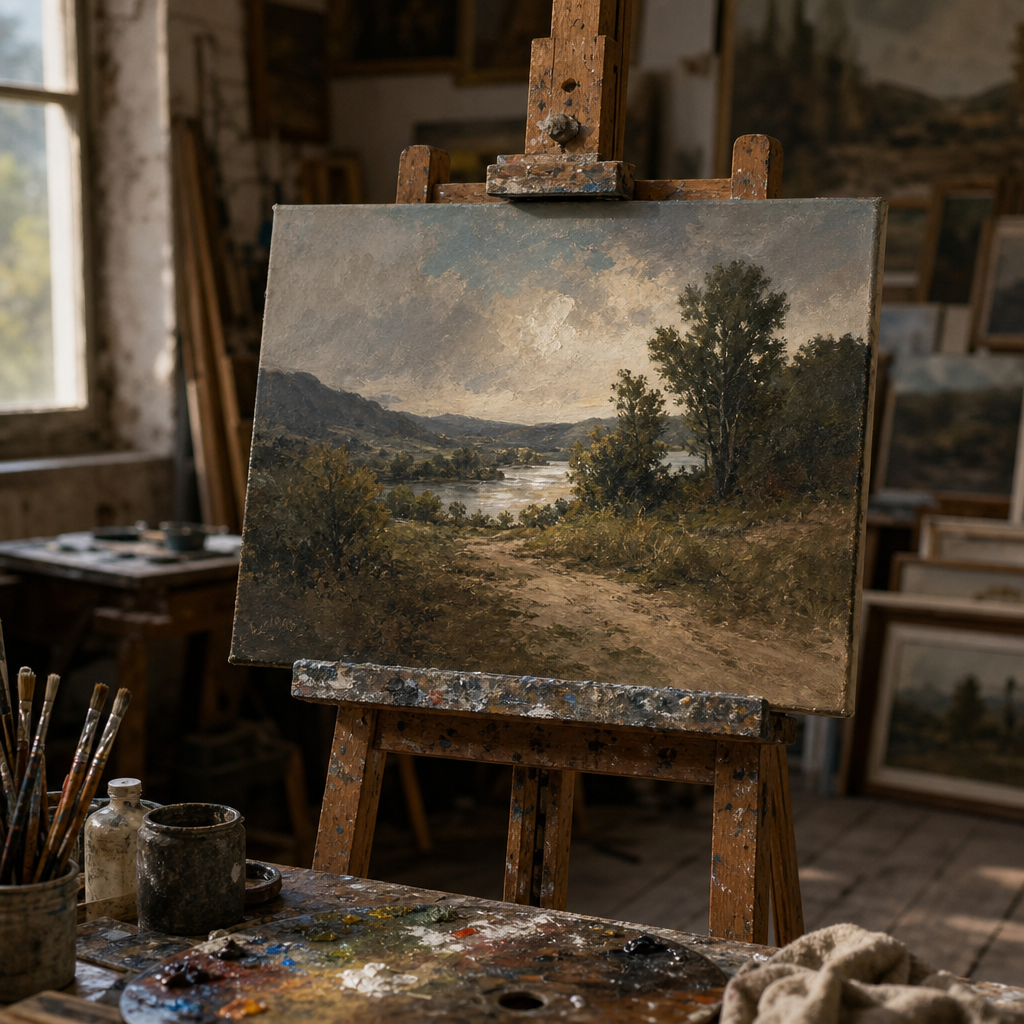
Most people’s reaction on seeing a Vermeer (even a decent print) is inexplicable. It looks as though it is being lit from within. The colours seem to be generating their own quiet warmth. It can look as though the Dutch had some secret pigment which has been lost, or simply that the passage of time has given everything a golden polish. But none of these explanations are quite right. The explanation for what you are seeing is buried beneath the paint entirely – a layer which the painter finished days before he picked up a brush.
The Blank That Isn't Blank
To a painter, a raw canvas or bare wooden panel is a disaster just waiting to happen. The wood breathes and flexes with the seasons; the canvas is fibrous and absorbent. Both surfaces are uneven at a microscopic level. They contain tiny troughs that will swallow paint unevenly, making colours look flat and dead. Before a single mark is made, that surface must be tamed. The answer, worked out over centuries of workshop practice, is ground preparation – the application of gesso or chalk ground to seal and smooth everything underneath.
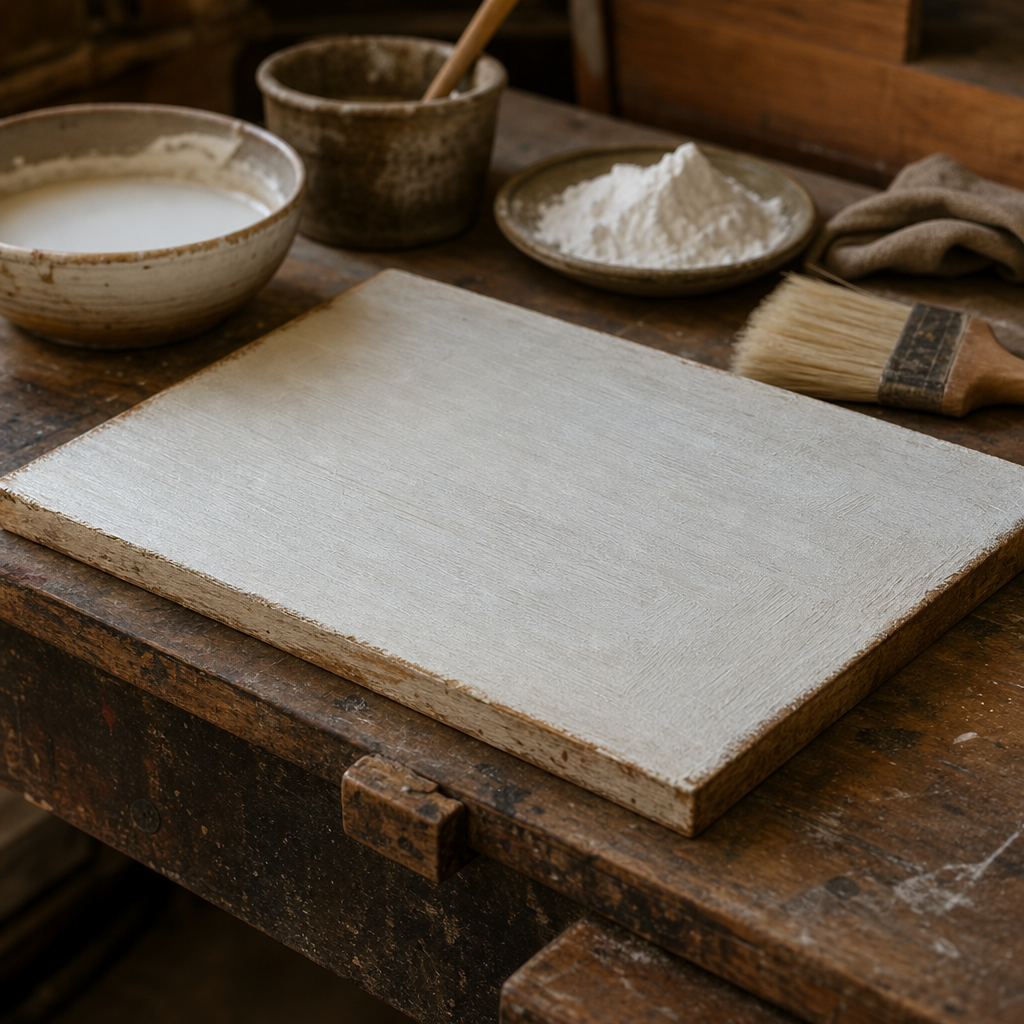
At its simplest, gesso is chalk or gypsum bound in animal-hide glue. Renaissance workshops prepared it obsessively. Wood panels were sanded by apprentices before a layer of raw animal glue was applied to seal the grain. This would be left to dry overnight before the gesso was built up in thin layers, sometimes six, sometimes a dozen, and sanded back between each layer. It could take the better part of a week before the master so much as thought about paint, but by then the surface would be smooth as ivory, hard and almost brilliantly white.
That whiteness is the whole point.
Why the Light Lives Down There
Oil paint, even in thick, confident strokes, is semi-transparent. So, light passes through it, hits the white ground beneath, and bounces back up through the paint layers, carrying colour with it. What you see when you stand in front of a well-grounded oil painting is not simply reflected light from the surface — it is light that has made a small journey into the picture, touched something almost luminous underneath, and come back out through layers of pigment. That is the glow. That is the quality you notice but cannot name.
When the ground is poorly prepared, or when modern panels use grey or buff-coloured grounds rather than brilliant white, the same trick simply does not work. The light that does enter does not bounce back with the same energy. Colours appear correct but are somehow inert, technically competent but not luminous.
This is also why many Renaissance painters worked in what looks like a strange order, building up pale, almost monochrome underlayers before adding colour on top. They were deliberately engineering the light path, using the white ground as the ultimate light source for the finished picture.
For more on the way British artists and dealers thought about the materials and values beneath a painting's surface, see The Gentlemen's Game: How the British Art Market Ran on Nothing But a Nod.
The Cracks Tell You What's Below
It also explains the craquelure of very old paintings. These cracks do not appear at random, but follow the boundaries of the layers. They run where the paint moves differently than the ground beneath it. The chemistry of oil and chalk ages at different rates. A properly prepared chalk ground cracks in fine, even patterns, and most of them run beneath the image. A poor or damaged ground cracks through the image itself – through faces and through skies. It does not texture the image, but splits it. Conservators of museums can read the history of a painting from the cracks in the paint, just as a geologist reads the layers of rock.
What the First Day of Painting Actually Looked Like
At first, nothing is going on in this fifteenth-century Florence workshop. It is several days into preparing a large altarpiece, and all there is to show is a white rectangle. No image, no gesture, no drama – just a journeyman sanding chalk, applying glue, waiting. He is working on what will hang in a church for five hundred years. And right now it just looks so boring. That’s where all the work of creating this painting is.