There's a moment, if you watch a small child in a house long enough, when you realise they're not confused about how rooms work. They're just working from a completely different map.
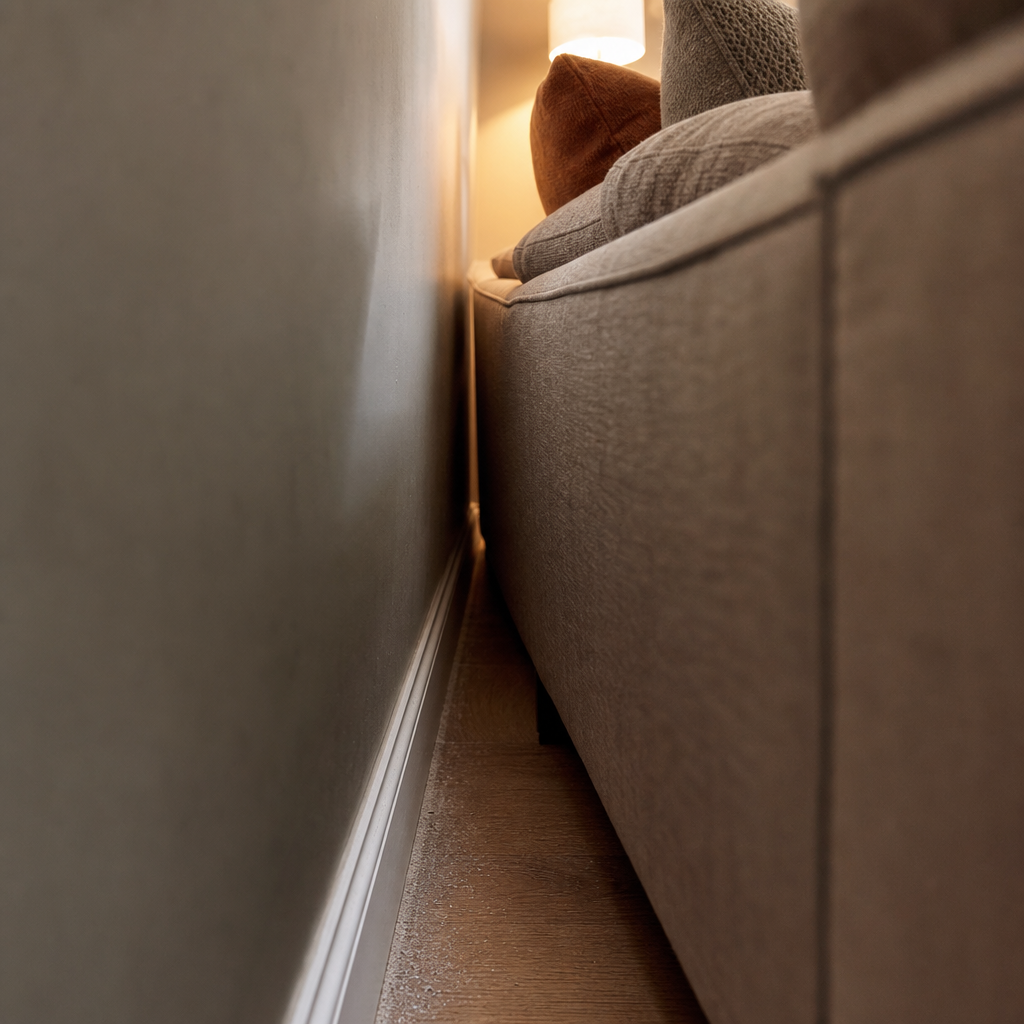
The gap behind the sofa is a cave. Obviously. The hallway is a racetrack – long, smooth, ideal for socks. The airing cupboard, warm and just the right size, is a kingdom that happens to smell of clean towels. These are not random choices. They're a perfectly coherent system, organised by texture, temperature, and the acoustics of a good roll. The child has surveyed the property and made excellent decisions.
What they haven't done is learned the other system. The adult one, in which a room has a name and the name has a set of rules attached to it. And the rules exist because of – well, what, exactly?
The Rules Arrived Later Than You Think
We talk about "lifestyle" as though it's a set of discoveries about how human beings live well, accumulated over centuries and handed down. Some of it is. But a surprising amount of it was simply invented quite recently, given a confident name, and repeated until it felt inevitable.
Take where you hang things on your walls. The large framed print above the sofa – the one that anchors the room, the thing every interior layout seems to assume is a permanent feature of adult life – is a genuinely modern idea. A surprisingly recent one at that. The Print Above Your Sofa Is a Very Recent Idea tracks exactly how recently this particular "obviously correct" arrangement became obvious. Once you read it, the whole living room feels slightly provisional. Which it is.
The Living Room Was Once Considered Strange Too
The idea of a room kept specifically for sitting and talking, separated from eating, sleeping, and working, would have struck most people in Britain throughout most of history as eccentric at best and wasteful at worst. Rooms had multiple uses because space was expensive and purposes were fluid. The living room, as a category, was created – a cultural decision that hardened, over time, into something that feels like physics.
The dining room followed a similar arc. The kitchen's social rise is even more recent. The kitchen-as-hub-of-family-life, the place where the good conversations happen and people perch on worktops and everyone ends up crowded around regardless of where the chairs are – that's practically a twenty-first century phenomenon in terms of how houses are actually designed and sold to accommodate it.
The child in the airing cupboard didn't get the memo about any of this. They're working off the raw data of the building.
The Lifestyle Conventions Children Skip Entirely
Here's what a child actually teaches you, if you pay attention. They know which floor is cold in the morning and which is warm. They know which corner of the garden gets the afternoon sun, and that the space under the stairs has a specific kind of silence. All of this worked out through direct investigation, without the filter of what a room is supposed to be.
The conventions that adults layer on top – this is where the sofa goes, this is where the art goes, the kitchen is for cooking but also now for living but not in a messy way, the bedroom is for sleeping and definitely not for screens, except obviously for screens – these are all negotiated positions. Social agreements that have been revised repeatedly and will be revised again.
None of which means they're useless. Conventions are how you avoid having to make every decision from scratch every day. The child doesn't have the luxury of ignoring the adult system forever; eventually they have to learn it, which is what we call "growing up" but might just as accurately be called "accepting the map."
The Bit Adults Have Forgotten
What gets lost in the transition, though, is the awareness that it's a map at all. Adults don't usually experience their homes as a set of cultural agreements about use. They experience them as just how homes work. Obviously. The gap behind the sofa is wasted space (a storage problem, perhaps). The hallway is for coats. The airing cupboard is for towels, not kingdoms.
The child who decides the hallway is a racetrack isn't wrong about the hallway. They're just working with the honest version of the information. It's a long, smooth, fast surface. Everything else is interpretation.