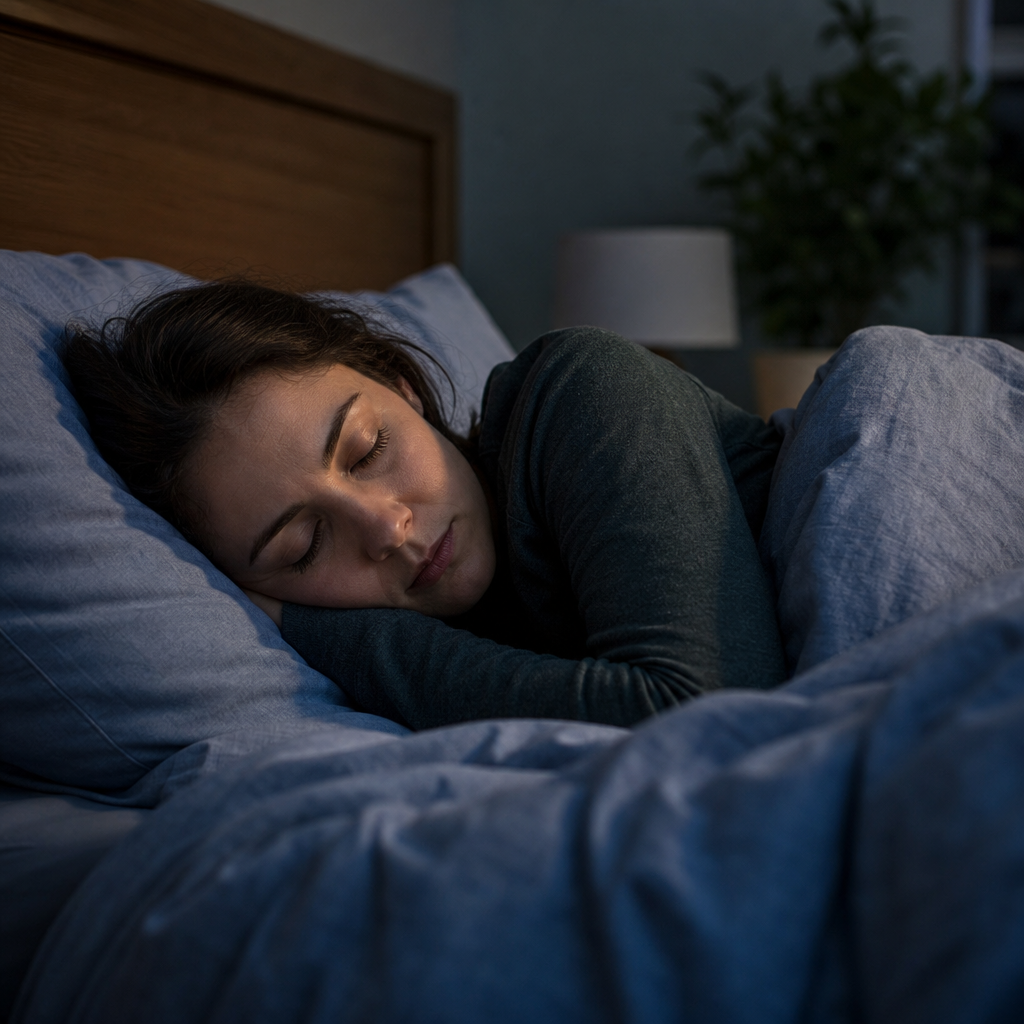
Somewhere around 3am, while you are doing absolutely nothing useful, your body clocks in for its most important shift of the day. Not rest, exactly. Not just the gentle tick-over of breathing and heartbeat. A full industrial operation – cellular, chemical, deeply weird – that the daylight hours simply do not allow. You are unconscious. The crew gets to work.
Most of us think of sleep as the absence of things happening. It is actually the opposite. The moment you go under, your body starts running programmes it has been queuing all day, held back precisely because keeping you awake and functional used all the available bandwidth.
The Brain's Own Cleaning Cycle
Here is something that was only confirmed in the last fifteen years or so: your brain physically shrinks, very slightly, while you sleep. Not dangerously – just enough to widen the gaps between cells and let cerebrospinal fluid rush through in pulses, flushing out the metabolic waste that has built up during the day. One of the things it is clearing is beta-amyloid, the protein that accumulates in Alzheimer's disease. Your brain, in other words, runs its own rubbish collection service. It can only do it when you are asleep. Miss the shift too often and the bins don't get emptied.
The system is called the glymphatic system – the "g" is for glial cells, the support cells that orchestrate the whole thing. Discovered in mice in 2012 and confirmed in humans shortly after, it spent the entire history of medicine being completely unknown to medicine.
What Growth Hormone Is Actually For
The pituitary gland releases most of its daily growth hormone in one big pulse, timed to the first deep sleep cycle of the night, usually sometime in the first couple of hours. Children need it to grow, obviously. Adults need it too – just for different things: repair of muscle tissue, maintenance of bone density, regulation of fat metabolism. It is not a performance drug. Maintenance. Like the boiler running its diagnostics at midnight.
The liver, meanwhile, has its own overnight agenda. Its detoxification cycles – the ones that process everything from alcohol to medications to the normal byproducts of digestion – run hardest in the small hours. Traditional Chinese medicine mapped the liver's "peak time" to between 1am and 3am, which is a somewhat different framework from biochemistry, but they were not entirely wrong about when the organ is busiest.
The Immune System's Night Meeting
Your immune system does not stop during the day, but it does reorganise at night. Certain immune cells – T-cells among them – consolidate the day's learning, reinforcing responses to anything the body encountered. This is partly why sleep deprivation makes you more susceptible to illness, and why you tend to feel worse at night when you are already sick: the immune system is running hotter then, doing its most active work.
It is also when the skin does its serious repair. Cell turnover peaks in the early hours, and collagen synthesis – the process that keeps skin structured and elastic – increases during sleep. Not marketing copy from a moisturiser brand. Just biology. For a piece on what keeps an old portrait looking strangely alive after centuries, The Faces That Refused to Fade touches on something the portrait painters apparently noticed without quite being able to explain: that a face changed after illness or poor sleep in ways that went deeper than tiredness around the eyes. They were picking up, without knowing it, on the visible deficit left when the night crew had been denied their shift.
What Happens When the Shift Gets Cut Short
The cruel thing about sleep debt is that you cannot fully pay it back. A run of short nights does not just leave you tired. It means the glymphatic flush was incomplete, the growth hormone pulse was interrupted, the immune reorganisation was truncated. A long lie-in at the weekend recovers some of it, but the specific timed processes – the ones triggered by circadian rhythm rather than just tiredness – cannot always be rescheduled at will.
The body is not passive at night. It is running on a programme older than consciousness itself, doing the jobs that daylight and wakefulness simply crowd out. You contribute to it mainly by leaving it alone.