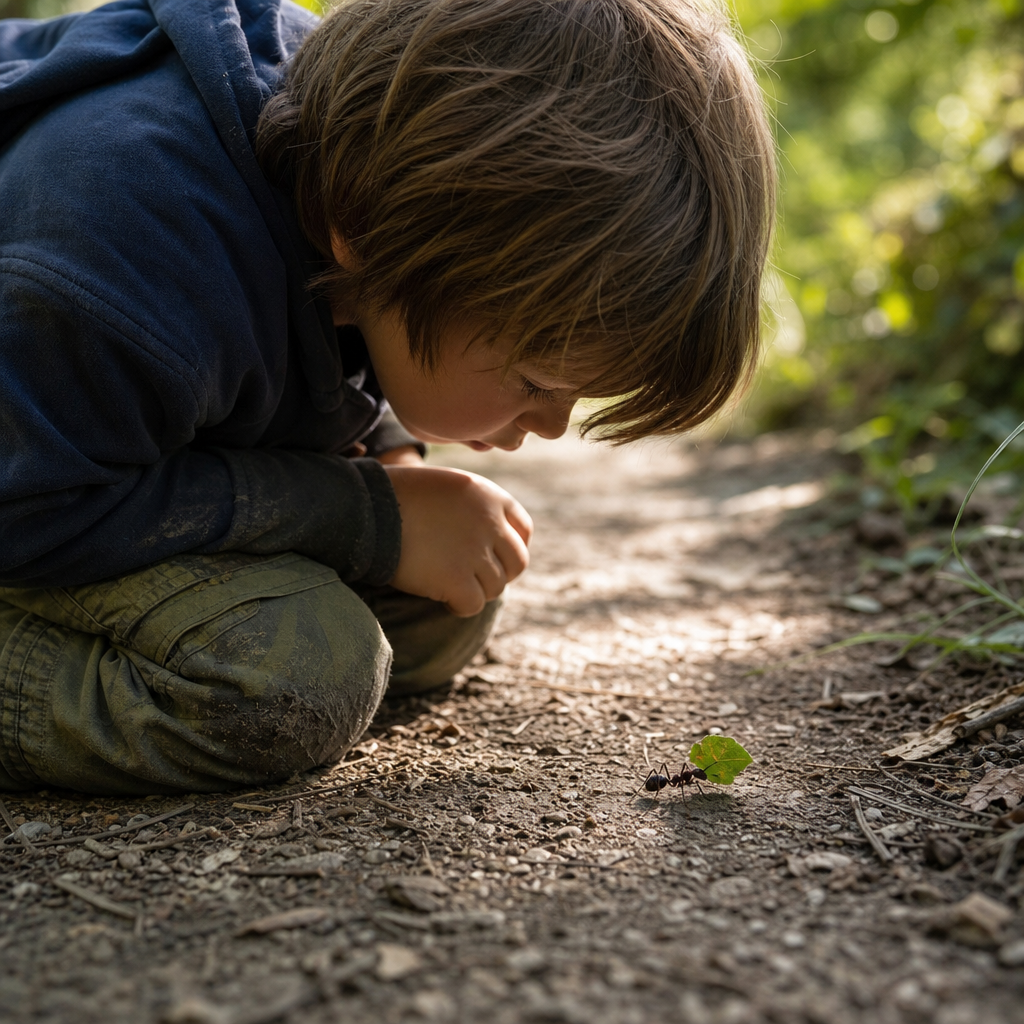
There's a particular posture children take. Knees down, nose close, completely ignoring the fact that their trousers are getting wrecked. They've found something – a beetle on a path, an ant carrying something three times its size, a snail making extremely slow and deliberate progress toward a lettuce – and they're just… staying with it. No notes. No plan. No idea what it's called. Just watching.
We tend to smile at this and then usher them gently onwards. There is, presumably, somewhere to be. Which is a shame, because what the child was doing is structurally, almost embarrassingly, identical to one of the most rigorous methods in field biology.
The Name Nobody Knows They're Using
Focal sampling is what field naturalists call the practice of picking one individual animal – one, not the whole flock or the general area – and watching it continuously for a fixed period. You track what it does. When it does it. How long it spends doing nothing. You stay. You don't scan. The resulting data can tell you things about behaviour, territory, feeding patterns and social dynamics that a thousand quick glances at a thousand different animals simply cannot.
The child crouched over the ant has independently arrived at this method. They haven't identified the species, and they probably can't pronounce "focal sampling". But they're recording duration, proximity and sequence – which are, as it happens, the correct instruments for understanding what an animal is actually doing, rather than merely confirming that it exists.
What Gets Lost When You Learn the Names
The adult brain, on the other hand, has been very efficiently upgraded with categories. Bird. Weed. Pest. Pigeon, probably. We scan, we identify, we move on. It feels like knowledge, and some of it is. But the scanning habit means we never see the second act.
The second act is almost always more interesting. A blackbird lands on a lawn – fine, noted, blackbird. But stay with that blackbird for ten minutes and you'll watch it do something strange with its head, tilting it almost to the ground. It isn't listening for worms (a common assumption). It's using monocular vision – one eye pressed close to the surface – because each eye faces sideways and sees a different world. The bird is looking for movement below the surface, not listening for it. Nobody teaches you that. You only find it out by staying.
A child will crouch over a puddle in a car park and find it genuinely interesting for a quarter of an hour. The adult sees a puddle. The child sees, if you look closely enough, a working ecosystem: midges landing to drink, a tiny water surface film being disrupted by each footfall, the way trapped air makes the water look silver at the edges. None of that requires a field guide. It requires proximity and time, which are free.
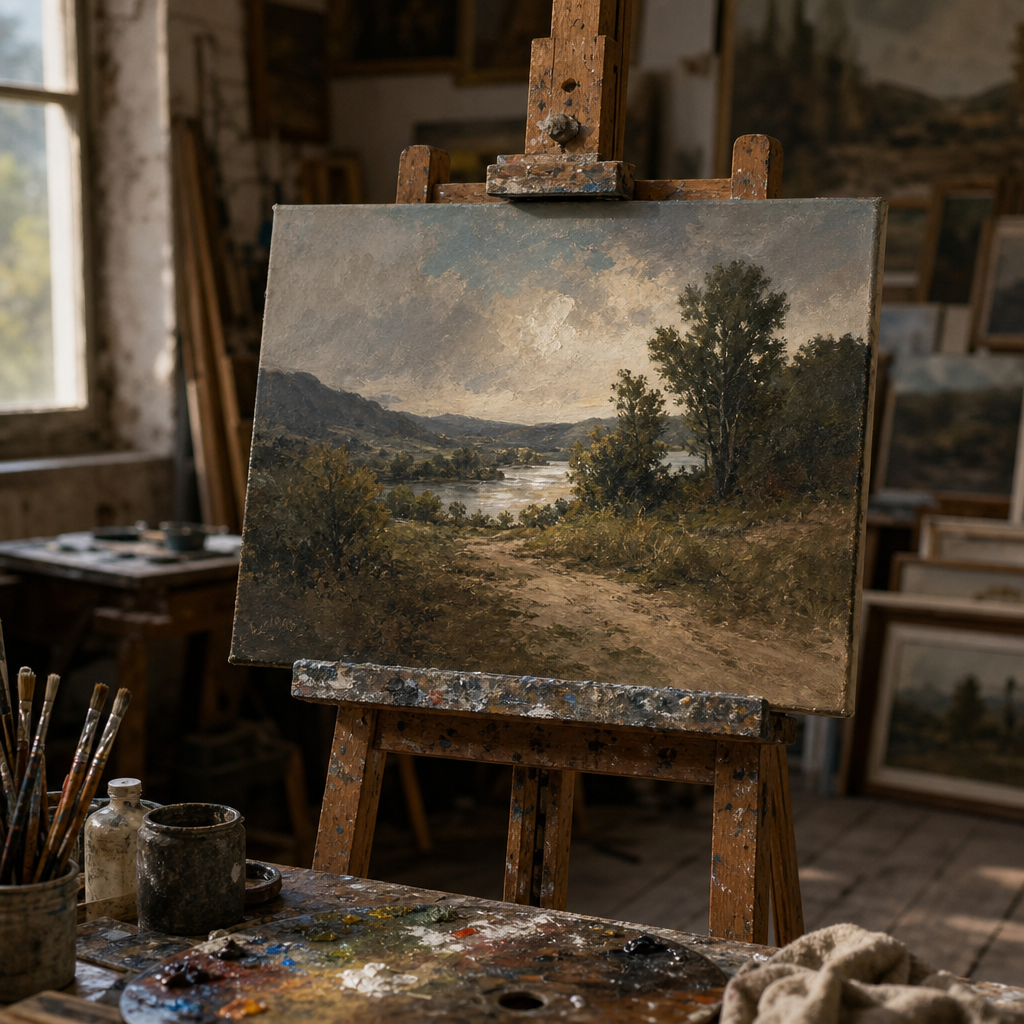
For a piece that rides a similar idea about what looking closely actually reveals, there's a good one here: You're Finishing the Painting Right Now.
The Stone You Keep Walking Past
The underside of a stone in the garden is one of the most reliably strange environments in Britain and almost no adult has looked at one for longer than three seconds. Flip it over and there's a whole compressed world: woodlice (which are crustaceans, more closely related to a crab than to an insect), ground beetles built like armoured vehicles, occasionally a slow-worm that looks alarming but is perfectly fine. Leave the stone in place. Watch for a few minutes before you replace it. You'll see how each animal responds to sudden light. That response – the woodlouse curling, the beetle reversing rapidly into a gap, the earthworm retracting – is legible if you stay long enough to read it.
This is exactly what children do without being told to. Not because they know about focal sampling or crustacean taxonomy, but because the thing is right there and it's doing something and they want to see what happens next.
Staying Is the Skill
We've decided as adults that knowing the name of something is the point. It isn't, quite. The name is a door, and a useful one, but the room behind it is made of time spent watching. The naturalist and the five-year-old with their nose two inches from a crack in the wall are working the same shift. One of them just needs considerably less knee padding.