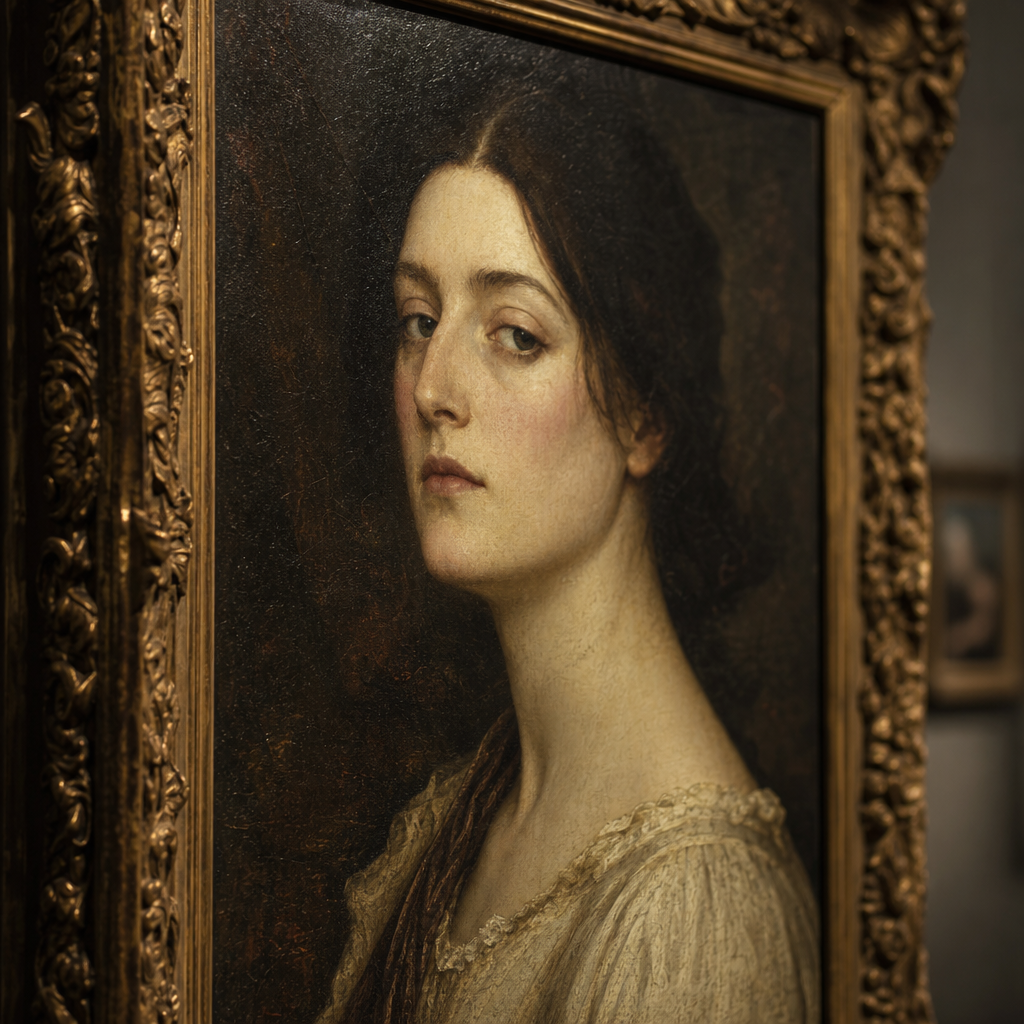
There's a particular kind of unease that a very realistic portrait can produce, even now. Something about the eyes following you. Something about the mouth that looks like it might open. Most of us shake it off and call it clever technique. But for several centuries of European viewers, that unease wasn't irrational squeamishness – it was a working theory about how images actually functioned. And that theory left fingerprints all over the art we now hang in galleries and admire for completely different reasons.
The idea, roughly, was this: a painting wasn't a copy of a person. It was a conduit to them. The same logic that ran through folk beliefs about the evil eye – that a lingering, covetous look could physically harm its target – extended naturally to portraits. If you stared too long at a beautiful face rendered in oil paint, you might leach something vital from the living subject. A painted wound might ache in a sympathetic viewer who looked too closely. The image was porous. It conducted. You had to be careful.

This wasn't fringe thinking. It sat alongside perfectly mainstream theology, in which the distinction between a religious icon and the saint it depicted was genuinely, troublingly blurred. Smash an icon and you were doing something to the saint. Light a candle in front of one and the warmth was, in some sense, felt.
Why Medieval Faces Look Like That
Once you know this, medieval painting starts to make a different kind of sense. Those flattened, hieratic faces – the ones that look stylised to modern eyes, almost like diagrams of faces rather than faces themselves – weren't just the result of painters who hadn't figured out anatomy yet. They were deliberate. A face that didn't quite cohere couldn't quite lock onto you. The gap between image and person was protective, for both the viewer and the subject.
Mirrors Pointing the Wrong Way
Dutch Golden Age painters were obsessed with mirrors. You find them in the backgrounds of domestic interiors, in the corners of allegories, bouncing light around in still lifes. What's odd, if you look, is how often they face away from you. The reflective surface points at a wall, or out of a window, or into a shadowed corner you can't see into. This has a dozen explanations, and art historians will give you all of them. But one that sits very comfortably alongside the others is this: a mirror facing the viewer was thought to be dangerous in a way that a mirror diplomatically turned aside was not. You weren't supposed to meet its gaze.
The Horse That Won't Stand Still
Equestrian portraits carry a version of the same thinking. What's striking, once you go looking, is how rarely the horse stands still. Almost always: mid-canter, one leg raised, caught between one moment and the next. The standard explanation is dynamism – power, vitality, all that. But there's an older layer under it. A still animal in a still painting was a fixed point of contact, a live wire between the painted world and yours. Movement in the image was a kind of ward, a way of keeping the picture from settling into something too real.
We stopped believing any of this, more or less, around the time that art criticism became a profession and paintings became objects to be assessed rather than approached with caution. But the conventions the belief produced just kept going, because they looked right. Even after anyone had forgotten why.
Questions this raises
- Why were some portraits deliberately damaged or covered up?
- Did artists avoid certain subjects because of this belief?
- How long did fear of images last in Europe?
- Does any of it survive in modern superstition about photographs?